
How to Read a PVC Resin Bag: Standards, Grades and What the Markings Actually Tell You
A practical guide to decoding PVC resin packaging — GB/T 5761-2018 vs enterprise standards, why S-700 and SG-5 are different systems, net weight tolerances, mercury-free grades and jumbo bags. With real bag photographs.
A purchase order for PVC resin says one thing. The bags that arrive often say something slightly different — a different grade name, a different standard number, a net weight written three different ways. For a buyer receiving a first shipment from a new supplier, this is where most of the anxiety lives.
This guide walks through what is actually printed on a PVC resin bag, what each line means, and which differences are normal versus which ones deserve a question before you sign the delivery note.
Everything below is industry-standard marking practice. We have photographed real bags from our own stock so you can compare against what you are receiving.
1. The standard line: GB/T 5761-2018 is not the only valid answer
The single most common source of confusion. Buyers often assume a bag without "GB/T 5761" on it is substandard. That is not correct.
| Marking | What it is | Is it acceptable? |
|---|---|---|
GB/T 5761-2018 | National standard for suspension PVC resin, current version | Yes — the baseline |
GB/T 5761-2006 | The previous national standard version | Yes, if the resin was produced under it |
Q/SH3160.77-2016 / -2019 | Enterprise standard (企标) — used by large producers whose internal specs are tighter than the national baseline | Yes — often stricter |
Q/TWPVC 001-2017 | Enterprise standard for a specialty grade (e.g. matte/消光 resin) | Yes — no national standard exists for that grade |
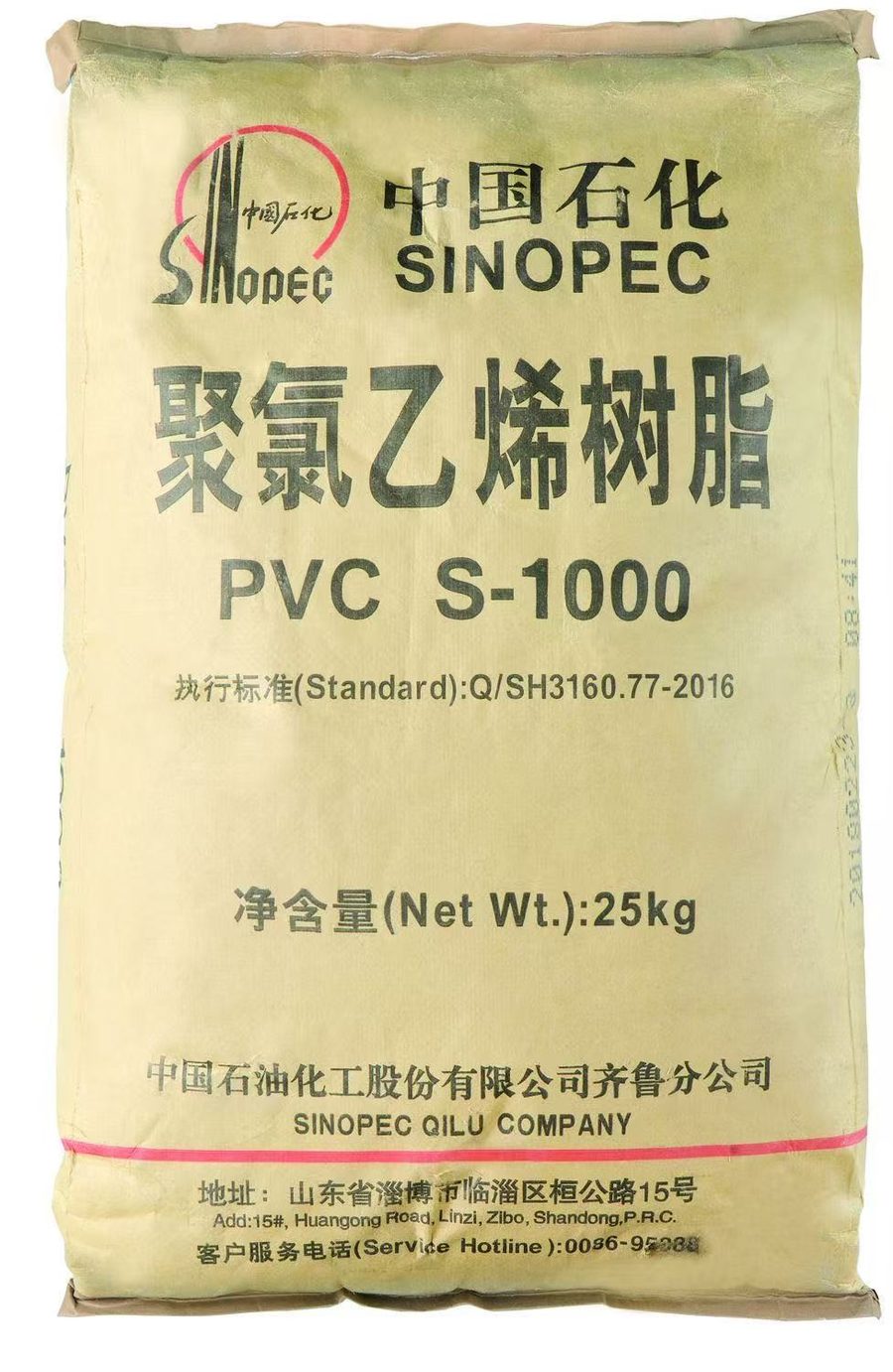
The practical rule: a standard line tells you which specification the batch was tested against, not how good the resin is. What matters is that the standard on the bag matches the standard on the COA you were sent. If the bag says Q/SH3160.77-2019 and the COA says GB/T 5761-2018, ask why — one of the two documents is describing a different batch.
2. The grade line: S-700 and SG-5 are two naming systems, not two products
This trips up experienced buyers too. Two numbering conventions coexist in the Chinese PVC market:
| System | Example | Who uses it | Maps to |
|---|---|---|---|
| National grade code | SG-5 | Most producers; the GB/T 5761 convention | The "5" indicates the K-value / degree of polymerization band |
| Producer model number | S-700, S-1000, S-1300 | Several large state-owned producers | An internal model line — the number is not the SG grade |
The trap: S-700 and SG-7 are not the same thing. The number in an S-series model is a producer-internal designator. Two different producers can both sell "S-700" and the resins may differ.
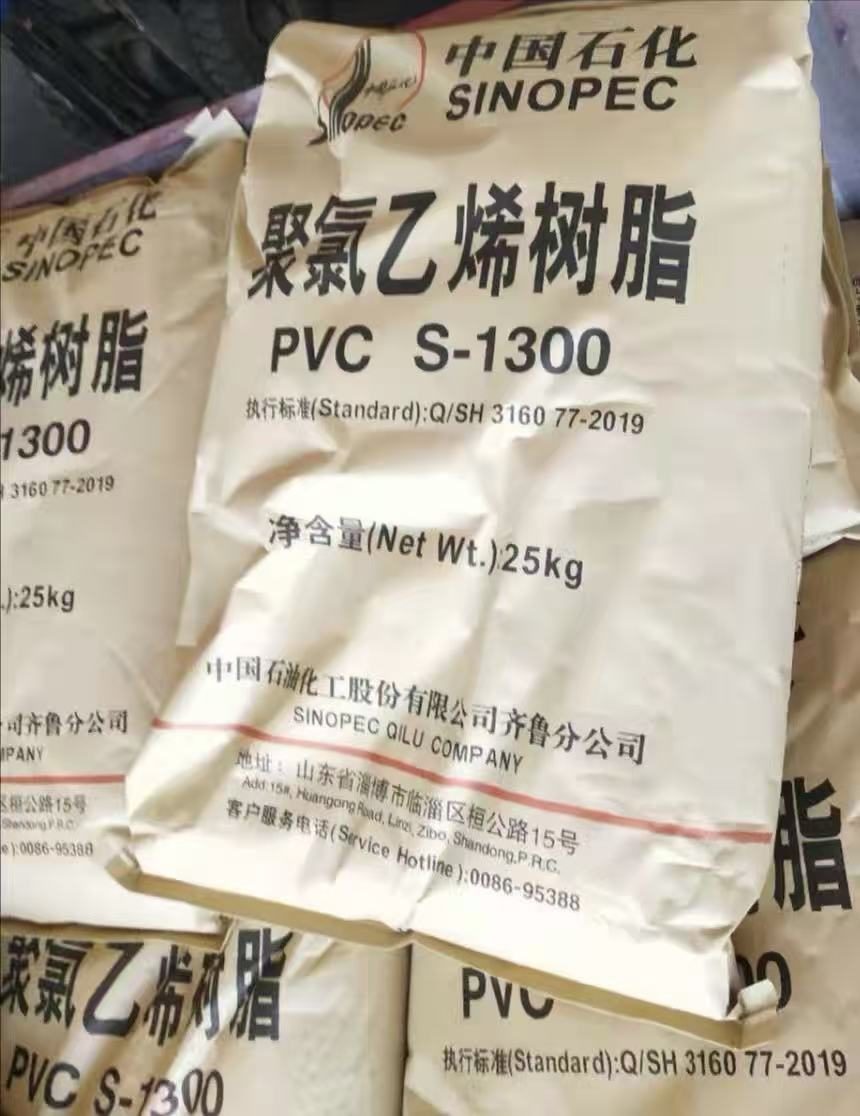
How to avoid the mismatch: when you receive an offer quoting S-1000, ask for three things in writing — the equivalent SG range, the K-value, and the application the resin is intended for. A supplier who cannot answer that is reselling without understanding the product.
3. Net weight: three ways of writing the same 25 kg
You will see all of these on legitimate bags:
| Printed as | Meaning |
|---|---|
净含量: 25kg | Nominal 25 kg |
净含量: 25.0kg ± 0.2kg | 25 kg with a stated filling tolerance — the honest version |
NET WT: 25kg | English equivalent |
净重: 1000KG | This is a jumbo bag, not a 25 kg sack |
A bag printed 25.0kg ± 0.2kg is not a warning sign. It is the more precise declaration — it tells you the filler's equipment is calibrated and the producer is willing to state the tolerance. Be more suspicious of a bag with no tolerance stated at all than of one that states ±0.2 kg.
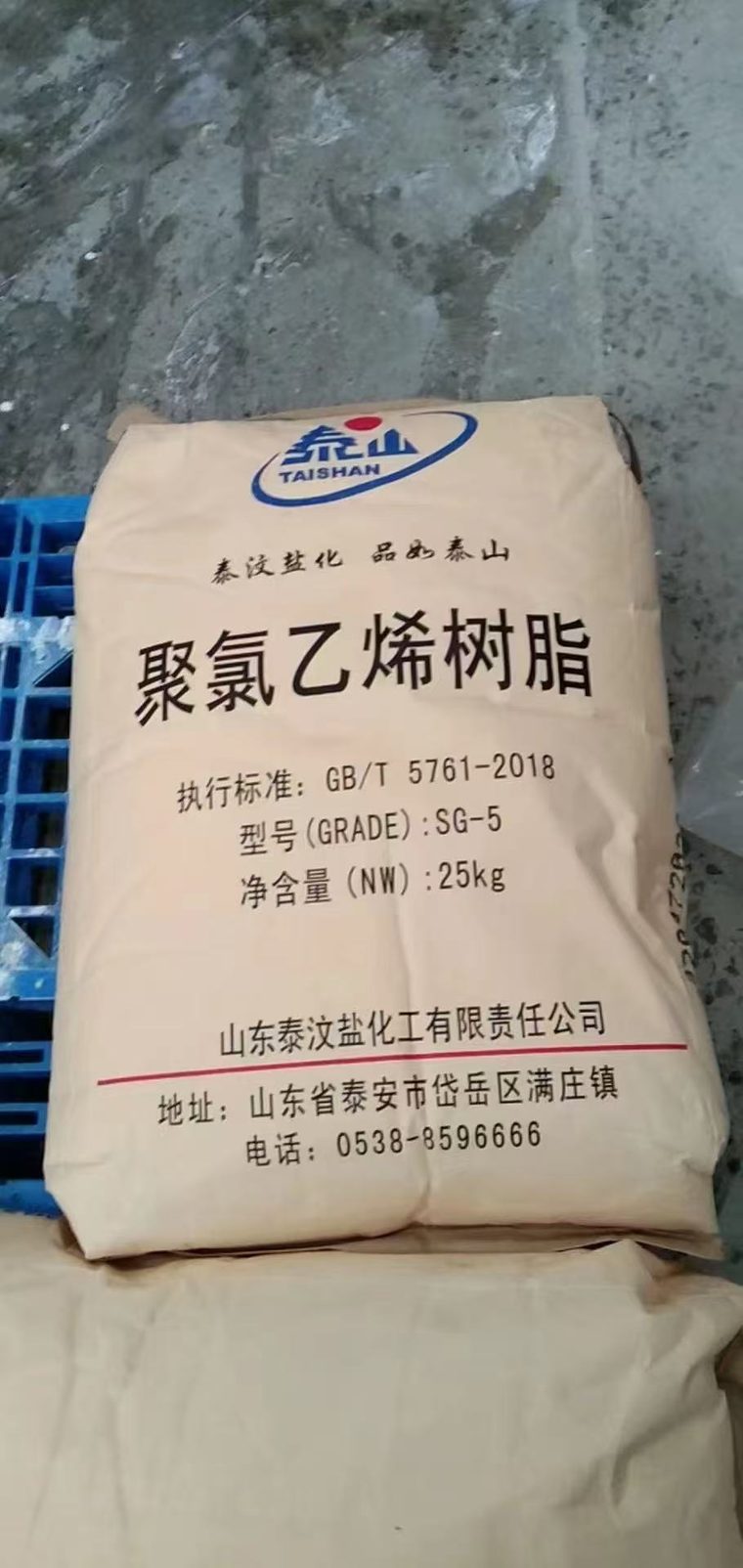
4. Mercury-free and PVC-FREE markings: what they are actually claiming
Some bags carry a Hg-FREE or PVC-FREE mark. These mean different things and buyers frequently conflate them:
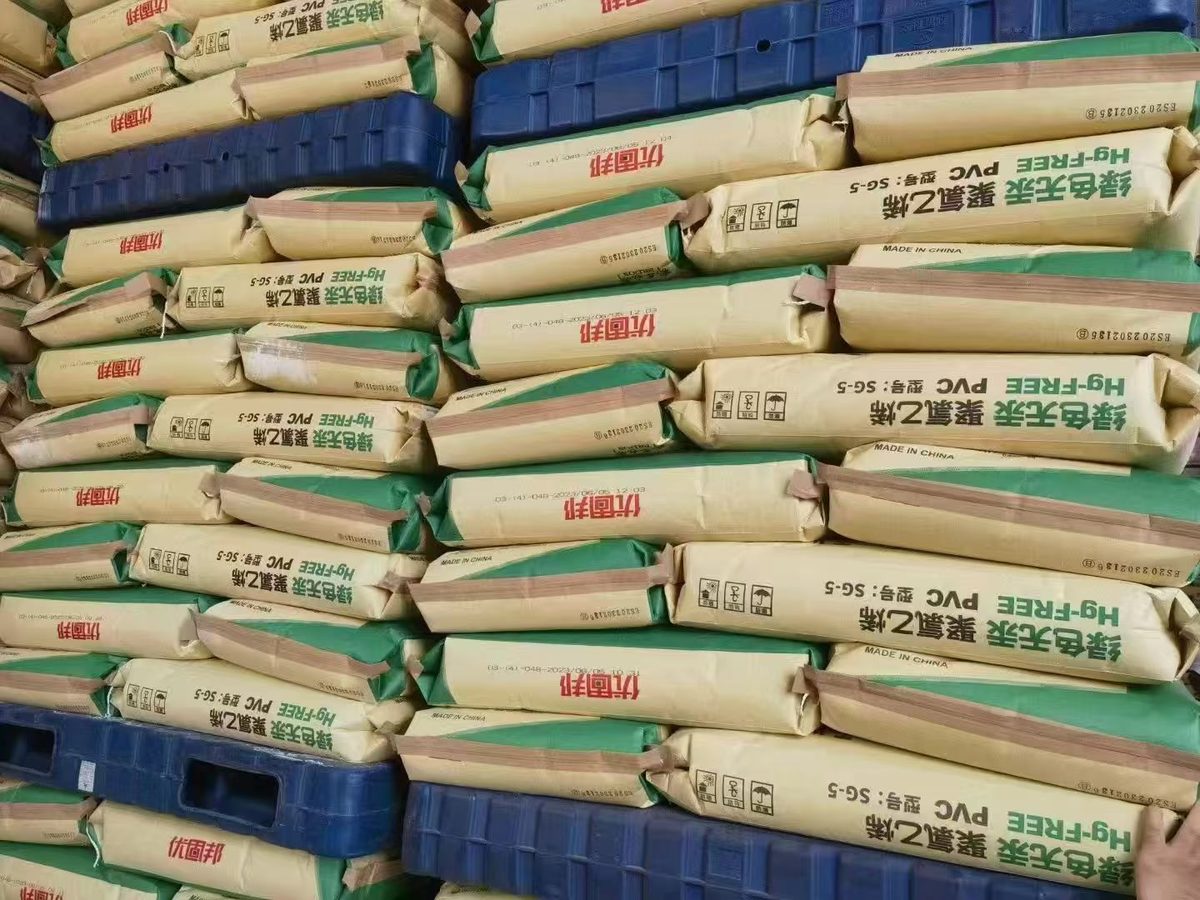
Hg-FREE(无汞) — the resin was produced using a mercury-free catalyst in the VCM process. Relevant if you are exporting to markets with mercury-restriction procurement rules. This is a process claim.PVC-FREEon a PVC bag — reads as contradictory, but on packaging it usually refers to the ink or the bag liner being PVC-free, or to a grade intended for food-contact applications where the additive package avoids certain phthalates. If you see this and it matters for your end use, ask for clarification in writing.
5. Jumbo bags: the same resin, a different handling decision
At roughly one tonne per bag, jumbo bags (FIBC / 吨袋) change your logistics, not the resin. Whether you order in 25 kg sacks or jumbo bags is a question about your unloading and feeding equipment, not about quality.
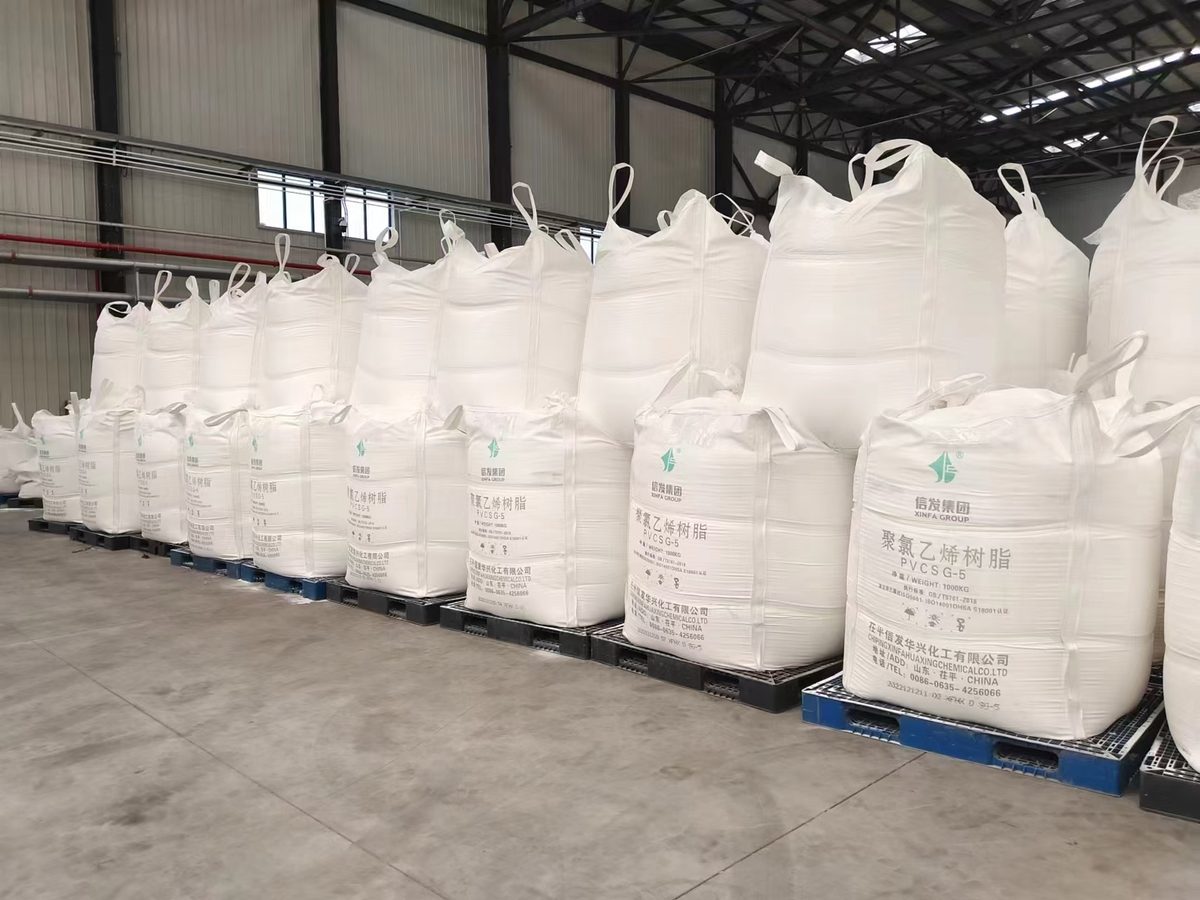
The trade-off is straightforward:
| 25 kg sacks | Jumbo bags (~1 t) | |
|---|---|---|
| Handling | Manual, no equipment needed | Requires forklift + lifting frame |
| Unit cost | Higher per tonne (packaging) | Lower per tonne |
| Resin loss | Lower — open one sack at a time | Higher — once opened, the whole tonne is exposed |
| Best for | Small plants, mixed grades, sample orders | High-volume single-grade lines |
6. What a full batch of stock actually looks like
Stock conditions matter more than most buyers expect, because PVC resin is hygroscopic. A bag that has been sitting in a damp corner will cause problems in your extruder that no COA will predict.
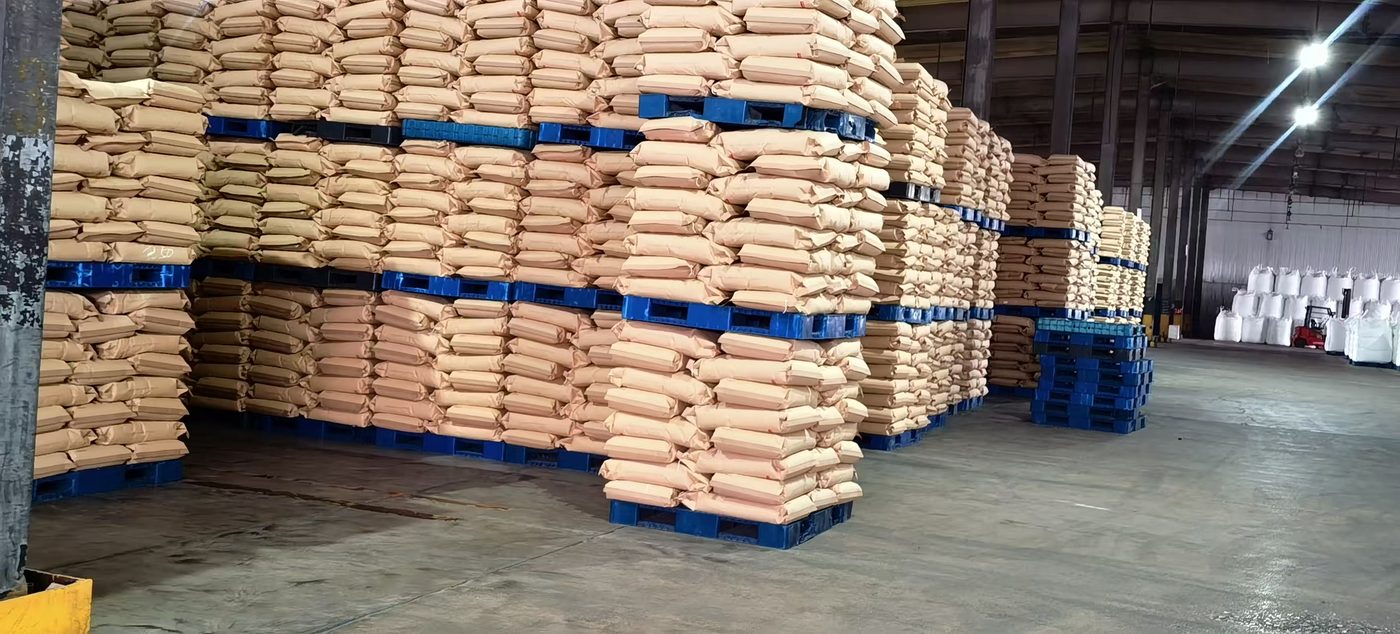
Two things to check on a physical inspection, both visible in this photograph:
- Pallets under everything. Concrete floors transfer moisture. Bags stacked directly on the floor are the most common cause of downstream "the resin felt different this time" complaints.
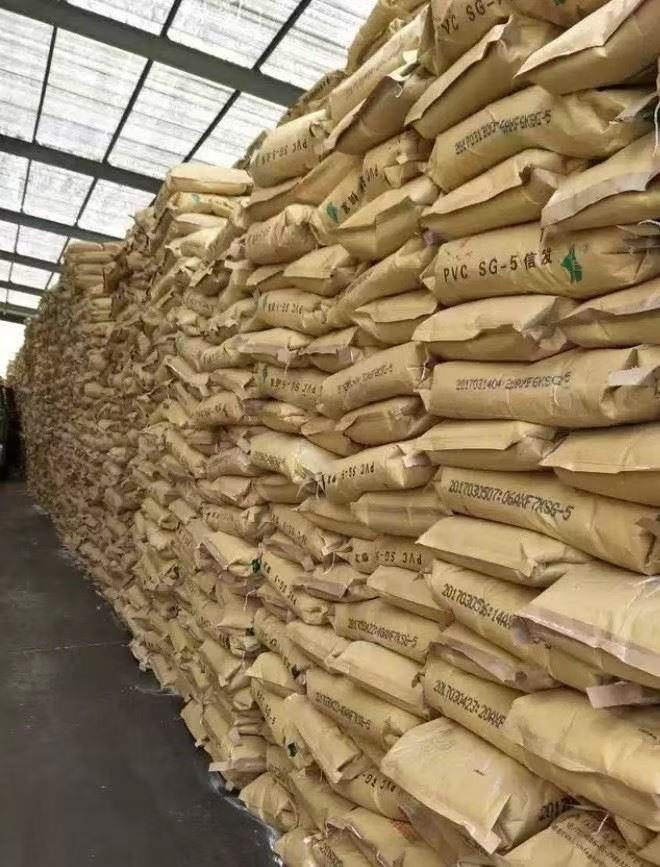
- No wall contact. A second photograph shows the same principle from the side — stock held clear of the wall, with air able to move.
7. The five-line check
Before you sign a delivery note, put these five lines side by side with your purchase order:
- Grade or model — and if it is an S-series model, the equivalent SG range in writing
- Standard number — and whether the COA in the file states the same one
- Net weight — nominal or with tolerance; jumbo bags check the tonne figure
- Batch / lot number — must match the COA you were sent
- Additive claims — mercury-free, PVC-free, food-contact — relevant only if your end market requires it
If all five line up, the paperwork and the physical goods agree. If one does not, raise it the same day, before the containers are unstuffed.
A note on where these photographs came from
Every image above is a real bag from our own stock, photographed as received. We have deliberately left the producer markings visible rather than editing them out — the point of this article is that you should be able to read these markings yourself, on whatever bags you are sent, from whoever you buy from.
If you want to know which of these grades suits your application, send us the K-value or SG range you need, the end product, and the quantity. We will come back with the specific model number and a firm offer.
Need SG-5 to land before your next production run?
Tell us the grade, the tonnage and the destination port. We come back with a price, a specification sheet and the full document list — usually within 12 hours, GMT+8.